
There was a time when we simply experienced things.
We walked into restaurants because they looked interesting. We watched movies because the trailer caught our attention. We visited new places without knowing what everyone else thought about them.
Today, things are different.
Before going anywhere, we search.
“Best restaurant near me.”
“Best movies currently in cinemas.”
Honestly, there is nothing wrong with that.
A few days ago, I was in the mood to watch Toxic. But after seeing the reviews for the movie, I changed my mind. Instead, I watched another movie, Hanuman Ansh. After watching it, I found it really entertaining.

But is this really about Toxic and Hanuman Ansh?
Or is it about how sometimes it might be better to experience things for ourselves?
Recently, I visited a restaurant called Numberdar in my hometown, Agra. I had seen its reviews on Google, so I decided to go there and have dinner.
And honestly, those reviews saved me both time and money. I enjoyed the meal, and the food was really tasty.

But what if I had decided to go to a different restaurant without checking the reviews?
That could have cost me both money and time. And honestly, I don’t always have enough of either to waste on an experience that might turn out badly.
Then there was another situation.
Recently, my wife got ill, and I decided to visit a doctor after checking the reviews on Google. I went there because the reviews gave me some confidence about the doctor.
But when I reached there, I found that there was a huge crowd, probably because many other people had also come after seeing the reviews. The waiting time was too long, and my experience with the doctor wasn’t really up to the mark.
So I decided to visit another doctor.
That doctor didn’t have many reviews or much information available online. But after just two days of medication, my wife got better.
So, is experiencing things the way we used to before actually better?
Maybe. And maybe not.
And that’s what makes this question interesting.
When Research Starts Making Decisions for Us
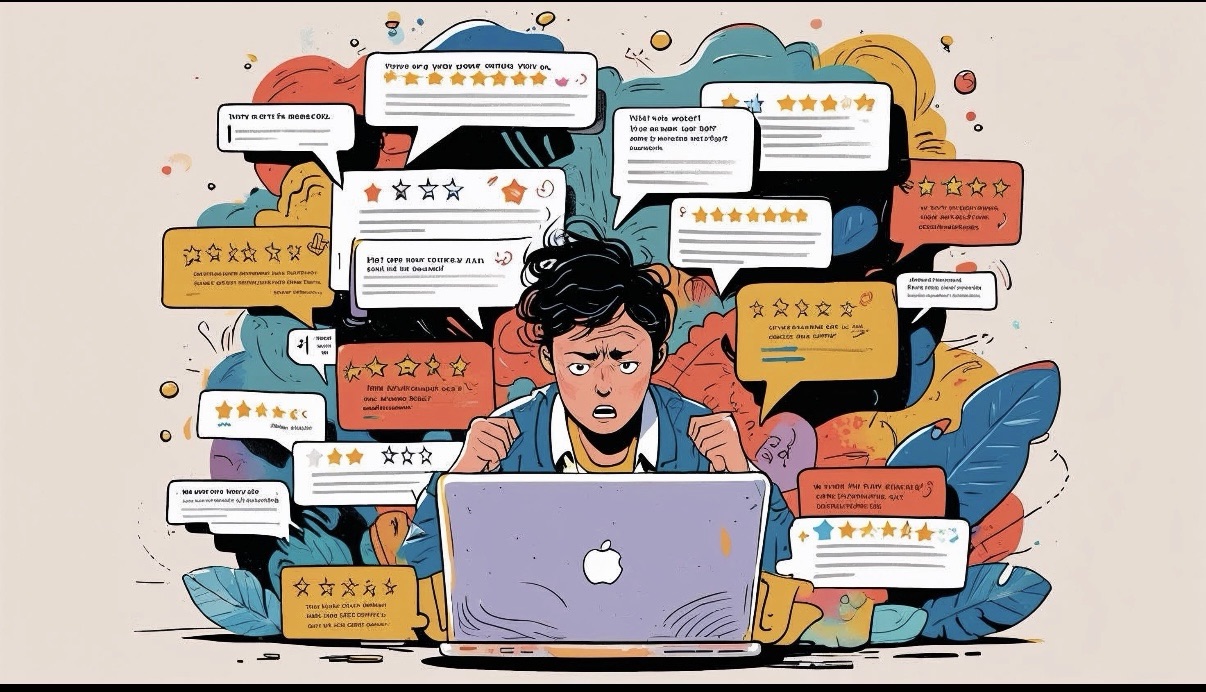
You check the ratings.
Then you read the reviews.
Then you look at photographs of the food.
You watch a couple of videos.
Someone says the pasta is amazing. Another person says the Chinese food is really good.
And by the time you actually reach the restaurant, you already have expectations.
You haven’t experienced the restaurant yet, but you already have an opinion about it.
And that’s where things get interesting.
Reviews are based on someone else’s experience.
Maybe they like spicy food. Maybe their taste buds are different from yours.
Maybe the chef was having a bad day when they visited.
And maybe your experience would have been completely different.
Are We Experiencing Things or Confirming What We Already Read?
Sometimes we don’t even realize how much our expectations influence us.
Suppose you read that a movie is boring.
You watch it expecting to be bored.
Ten minutes in, you’re thinking, “Yep, they’re right.”
But what if you had gone in without reading that review?
Maybe you would have noticed something different.
Maybe you would have enjoyed it.
Maybe you still would have hated it.
But at least the reaction would have been completely yours.
And perhaps that’s what we are slowly losing — the surprise of forming our own first impression.
But Let’s Be Honest — Reviews Are Useful
I’m not going to pretend that we should stop reading reviews.
If a restaurant has hundreds of people complaining about terrible service, checking that information before spending your money makes complete sense.

If a hotel has serious problems, why discover them after paying for the room?
If a product has a common defect, why shouldn’t we know about it beforehand?
Information is useful.
The problem is when we stop using information as a guide and start using it as our final answer.
You can see this even in our school and college days.
Imagine you wanted to meet someone new, but before meeting them, you asked a friend who had already met that person.
If your friend had a bad experience with them, they would probably tell you that the person wasn’t good enough to be friends with or even worth meeting.
But what if that person was simply going through a bad time?
What if they were in a bad mood when they met your friend?
What if your experience with that person could have been completely different?
If you meet them already carrying your friend’s opinion in your mind, you might start looking for reasons to believe that opinion.
And perhaps the meeting wouldn’t go well — not because the person was actually bad, but because you had already decided what to expect.
So should we ignore our friends’ advice?
Of course not.
But maybe we shouldn’t let someone else’s experience become our own before we’ve even had the chance to experience it.
There is a difference between saying:
“Let me see what people think.”
and saying:
“People don’t like it, so I won’t like it either.”
That difference may seem small, but it can completely change how we experience things.
The Internet Has Given Us More Information Than Ever

We can know almost everything before experiencing almost anything.
We can see a restaurant’s menu before entering it.
We can see a hotel’s room before booking it.
We can watch a movie trailer, read reviews, see ratings, and even find out what other people thought about the ending.
We have made life more predictable.
And that’s incredibly convenient.
But maybe not everything needs to be predictable.
Sometimes the best part of trying something new is not knowing exactly what you’re going to get.
Maybe that’s what makes an experience feel like an experience in the first place.
Maybe It’s About Finding the Balance
I’m not saying we should delete Google, stop reading reviews, or blindly spend our money.
That would be unrealistic.
Research can protect us from wasting time and money.
But perhaps we can leave a little room for our own experience too.
Check the reviews.
Understand the risks.
Make an informed decision.
And then, once you’re there, let the experience be yours.
Don’t constantly compare it with what somebody else said.
Because at the end of the day, a five-star review doesn’t guarantee that you’ll love something.
And a one-star review doesn’t guarantee that you’ll hate it.
Someone else’s experience can inform you.
It doesn’t have to define yours.
Maybe that’s the real question we should be asking in this age of endless information:
Are we using the internet to make better decisions, or are we slowly letting it decide how we should feel?
I don’t think the answer is to stop searching.
We need information. We need reviews. We need other people’s experiences, especially when our time, money, or even someone’s well-being is involved.
But perhaps we also need something else:
the freedom to experience something without already knowing what we’re supposed to think about it.
Because sometimes the best part isn’t knowing whether something is good or bad.
Sometimes it’s finding out for yourself.
And perhaps, every once in a while, it’s okay to search a little less — and experience a little more.
Leave a Reply